“OOH operates in public space, so its contribution should extend beyond advertising”
Giorgi Trapaidze, CEO of ALMA, Georgia’s leading Out of Home company, was among the speakers at the WOO Central European Forum in Warsaw. In this interview he talks about a market where OOH already takes around 10% of advertising spend, twice the global share, why international advertisers buy on execution rather than locations, building for the long term in a difficult neighbourhood, and ALMA’s ambition to take what it has built in Georgia into new markets.
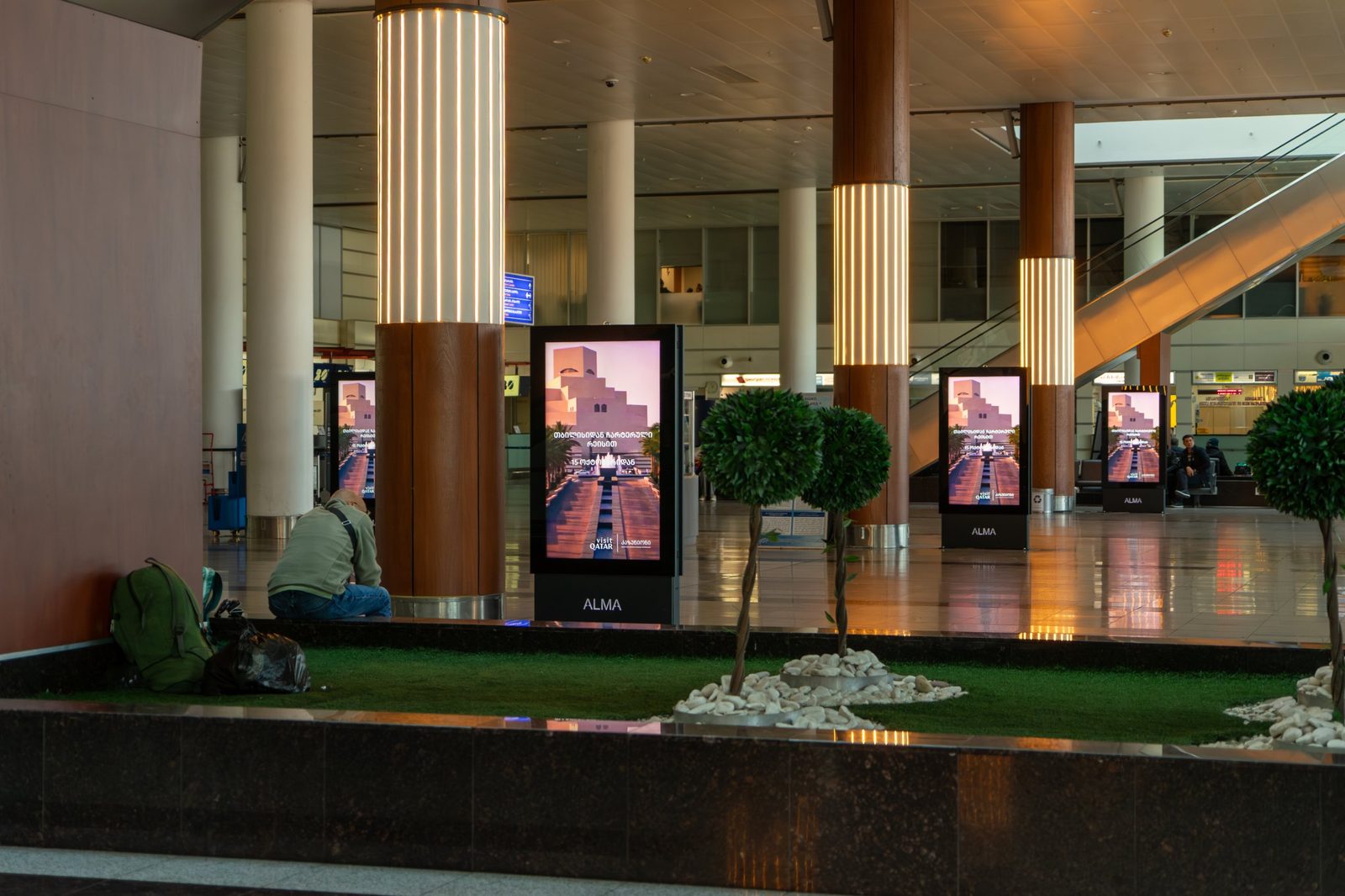
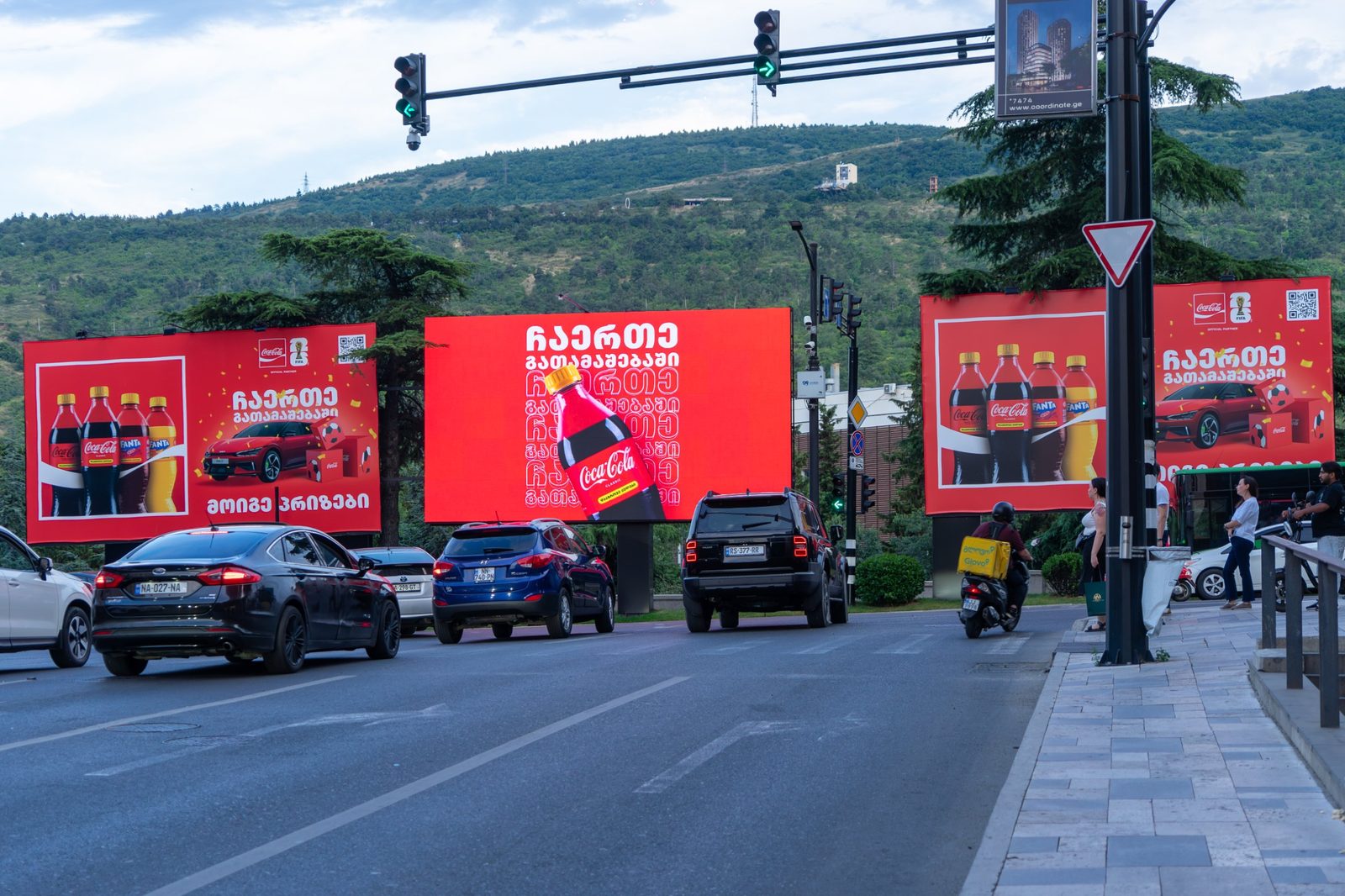 Synchronised DOOH across a Tbilisi junction
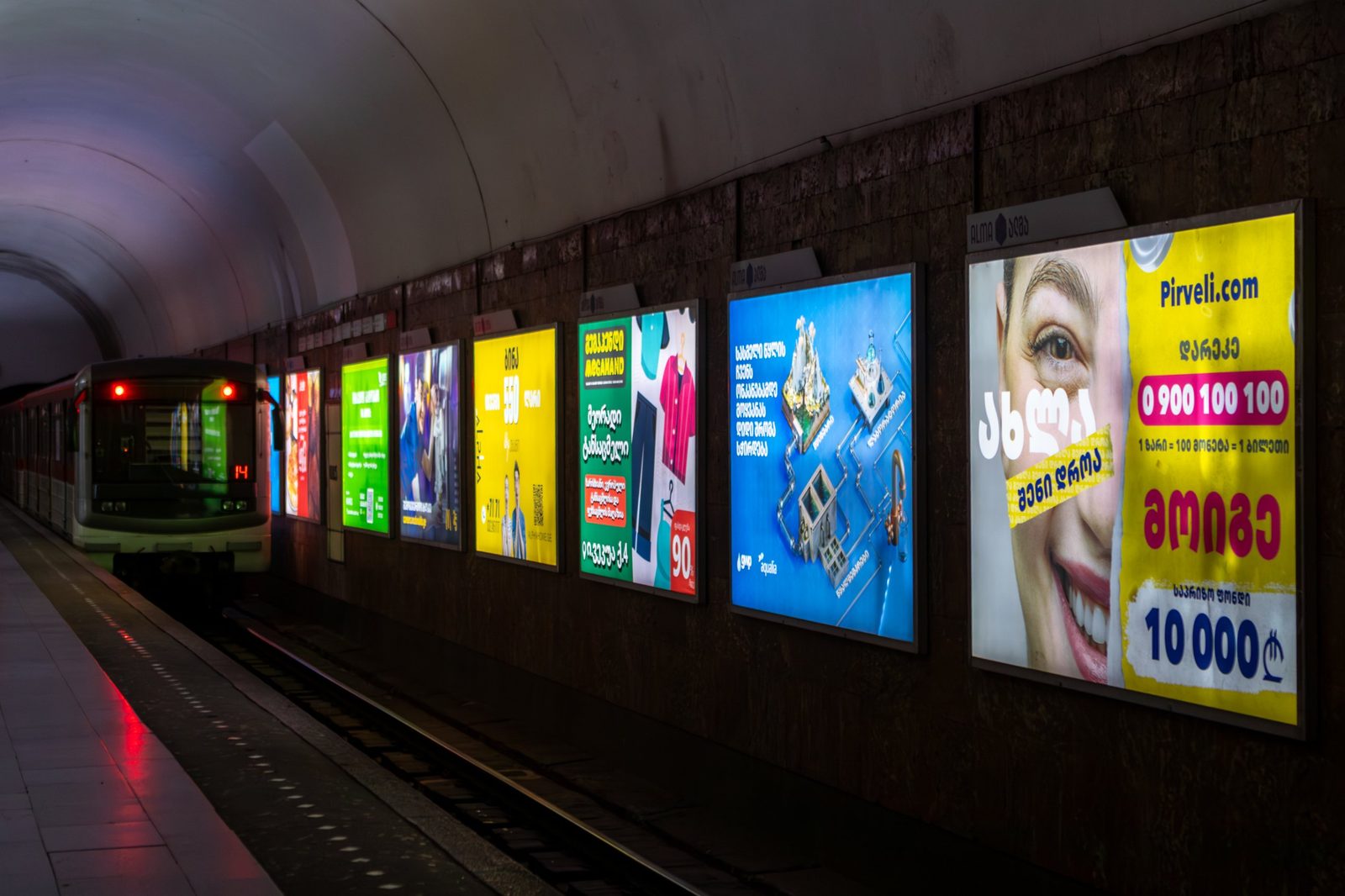
ALMA has been operating in Georgia for more than 30 years and today accounts for around 90% of the country’s Out of Home market, with a nationwide network that spans billboards, digital screens, city formats, buses, the metro, bus shelters and airports. Alongside the advertising business it builds and maintains civic infrastructure for Georgian municipalities, from bus shelters to pedestrian bridges.
With the Forum focused on Central Europe and its neighbours, WOO asked Giorgi Trapaidze about Georgia’s market, the realities of operating in the region, and where ALMA goes next.
ALMA is a leading media owner in the region. How has it grown, and what does it offer now?
ALMA has been operating in Georgia for more than 30 years. Its growth has been built around a clear ambition: to make out-of-home a more accessible, consistent and accountable advertising channel. We have developed a nationwide network spanning billboards, digital screens, city formats, buses, metro, bus shelters and airports. Today, we account for approximately 90% of Georgia’s OOH market.
However, the size of the network is only part of the story. Our approach brings together three priorities: a consistent experience for advertisers, long-term partnerships with municipalities, and technology that improves how we operate. For a client, that means reducing complexity throughout the campaign journey, from selecting locations and booking to production, installation, verification and reporting.
What are the growth prospects for Georgia’s advertising market, and OOH specifically?
Georgia’s economic growth creates a strong foundation for advertising. As businesses expand and compete for customers, the opportunity for media grows with them. But a growing economy does not automatically translate into a stronger advertising channel. Each medium still has to demonstrate why it deserves investment.
OOH already has a substantial position in Georgia. We estimate that it represents around 10% of advertising expenditure, compared with approximately 5% globally. That suggests considerable scope for OOH to play a more prominent role in the media mix.
How easy is it to attract business from major international advertisers?
It requires more than attractive locations. International advertisers need confidence that a campaign can be planned, delivered and evaluated to a consistent standard. Local market knowledge is important, but so are reliable execution, clear reporting and a straightforward buying process.
This is where our customer-focused approach becomes particularly relevant. A campaign across several cities should not mean navigating incompatible specifications, separate booking procedures and inconsistent measurement. The more of that complexity we remove, the stronger our proposition becomes.
We are investing in integrated operations, audience analytics and customer platforms to support that objective. Ultimately, international advertisers need to understand both the audience they can reach and the quality of the service behind the campaign. Making those elements clear and credible is central to earning their confidence.
Russia is a major geopolitical power in the region, with particularly difficult relations with the West since the invasion of Ukraine. How has this affected your business?
The war in Ukraine forms part of a deeply challenging regional environment, and Georgia has its own direct experience of security pressures and Russian occupation. These are realities that we cannot separate from the context in which we do business.
Our approach is grounded in both realism and a long-term perspective. We recognise the uncertainty around us, while continuing to invest in our network, strengthen our operations and develop partnerships with cities and advertisers.
The important point is that geopolitical challenges have not removed the need to build for the future. Georgia’s economy has demonstrated considerable resilience, and our responsibility as a business is to combine an awareness of risk with the discipline to keep improving. That balance is an important part of ALMA’s development.
Georgia stands at the intersection of Europe and Asia. Is this a benefit?
Yes, it gives Georgia a distinctive position and considerable potential. With its location on the Black Sea and its historical role connecting trade and cultures, the country can serve as a meeting point between different markets and perspectives.
For an advertising business, however, geography is a starting point. Its value depends on the quality of the infrastructure, services and commercial relationships built around it. Our role is to provide a media network that makes it easier for brands to communicate with audiences across the country, supported by consistent execution and an understanding of local conditions.
Having established a strong nationwide presence in Georgia, we now see an opportunity to apply our knowledge and experience in other markets. Our ambition is to develop ALMA into an international business, building on the capabilities we have developed at home while adapting to the needs of each market. We are therefore open to a range of partnerships with operators and other industry participants whose strengths and ambitions align with ours, across our region, Central Asia and Eastern Europe.
How can OOH make a wider contribution to cities and societies in the region, through street furniture and similar infrastructure?
OOH operates in public space, so its contribution should extend beyond advertising. A well-designed partnership can provide cities with useful infrastructure, backed by private investment and a clear commitment to maintenance.
In Georgia, our municipal partnerships encompass street furniture, bus shelters, pedestrian bridges and other civic infrastructure. The principle is straightforward: commercial activity should support assets that serve the city and its residents. The operator’s responsibility continues long after installation, through the quality of upkeep and the ability to respond to changing needs.
Long-term agreements make that investment possible by providing a predictable framework. They also need enough flexibility to accommodate new technology and evolving urban priorities.
The strongest partnerships begin with an understanding of what the city needs. When that becomes part of the operator’s commercial strategy, OOH can deliver lasting value for residents, municipalities and advertisers alike.
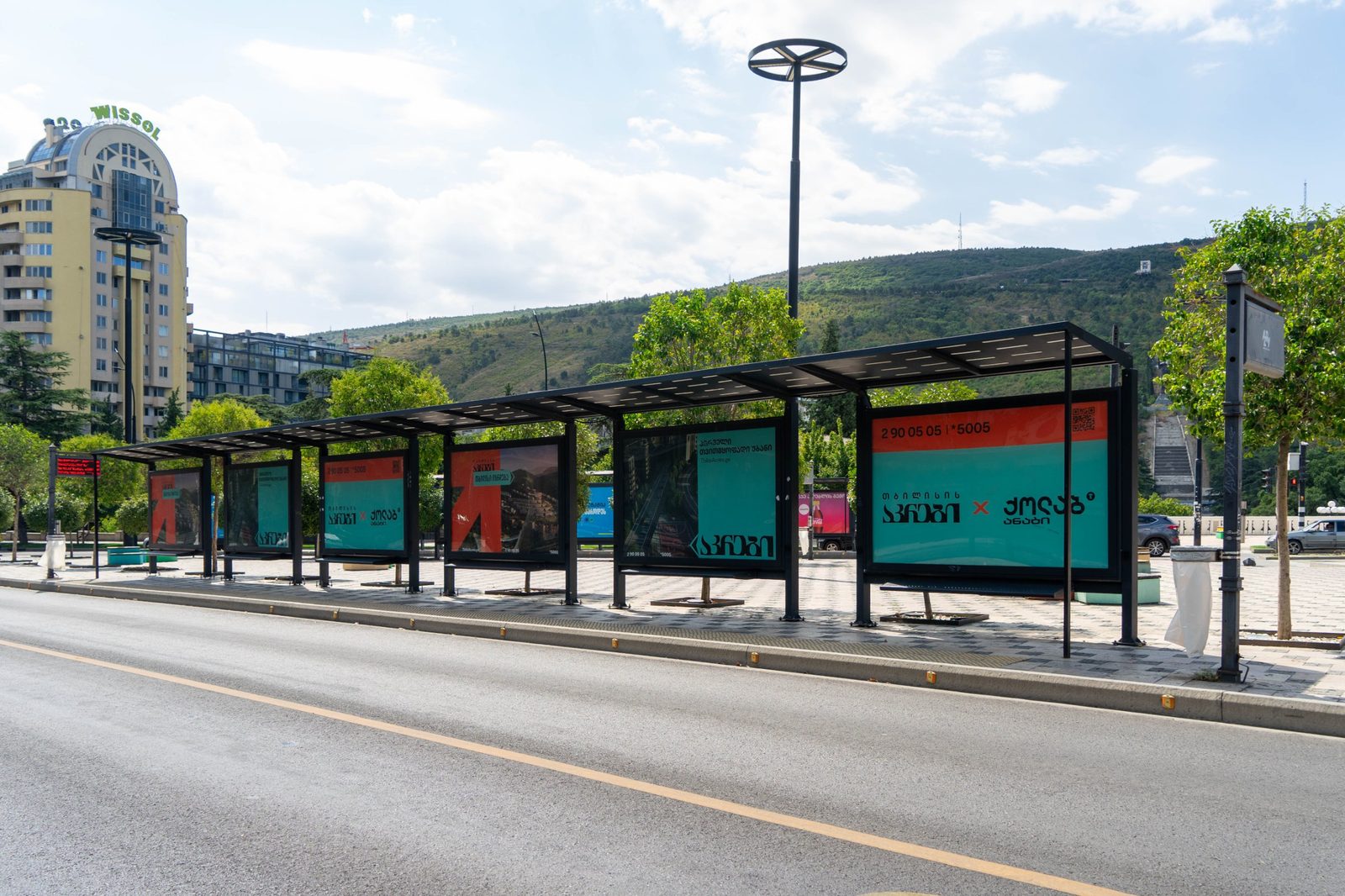 Bus shelters built and maintained by ALMA in partnership with the city of Tbilisi

About Giorgi Trapaidze
Giorgi Trapaidze has led ALMA, Georgia’s leading out-of-home advertising company, since 2014. He brings six years of experience in corporate banking and lending, as well as three years leading a real estate company. At ALMA, he oversees day-to-day operations, growth, digital development, audience measurement and international expansion.
His experience across finance, real estate and advertising shapes his approach to long-term investment and partnerships with cities. He focuses on making out-of-home advertising easier to plan, buy and measure, while delivering consistent service for advertisers.
WOO Central European Forum, Warsaw 2026
Giorgi Trapaidze spoke at the WOO Central European Forum in Warsaw, 21–23 October 2026, which brought together the leaders of Out of Home from across Central and Eastern Europe and beyond.
Forum highlightsWOO PARTNERSThe organisations powering Out of Home worldwide
Platinum Annual Sponsor





Gold Annual Sponsor

Silver Annual Sponsor


Event Supporters
Event Platinum Sponsor
Event Gold Sponsor
Event Silver Sponsor
Event Sponsor

Event Exhibitor

Media Partners

Supporting Association
AiOO
Platinum Annual Sponsor
AiOO is a global technology company powering the convergence of Digital Out-of-Home and Retail Media, with presence in NYC, Madrid, Dubai, and Casablanca. Our proprietary edge AI and computer-vision technology transforms physical spaces into measurable, addressable media delivering real-time, privacy-by-design audience insights and verified campaign performance.
Built for retailers, media owners, and venue operators, AiOO enables Retail Media networks to monetize in-store traffic with smarter screen planning, audience segmentation, and closed-loop measurement. In parallel, our DOOH stack supports automated operations, holistic ad serving, and programmatic activation—helping partners scale revenue while giving brands and agencies the accountability and precision they expect from digital media.
By bridging the physical world with digital-grade intelligence, AiOO accelerates the shift toward data-driven, performance-ready OOH and Retail Media worldwide.
Website: aioo.tech
LinkedIn: aioo-tech
Instagram: aioo_tech
billups
Platinum Annual Sponsor
billups is an independent global out-of-home (OOH) agency helping advertisers, agencies and OOH media owners strengthen media performance through a patented analytics and measurement platform. With over 20 years of experience and employees spanning 19 countries, their team unites local OOH expertise with global accessibility to actualize international marketing initiatives. billups uses proprietary and patented AI-powered technology to plan, optimize and report on media effectiveness, making OOH an indispensable part of media plans.
Discover how billups is reinventing OOH for the performance age at www.billups.com.
Broadsign
Platinum Annual Sponsor
Broadsign empowers media owners, media buyers, and retailers to harness the power and reach of out-of-home (OOH) to connect with audiences in ways unlike any other advertising channel. More than 2 million static and digital signs along roadways and in airports, shopping malls, grocery and convenience stores, health clinics, transit systems, and more run on Broadsign. The Broadsign Platform helps media owners and retailers, such as Outfront, Pattison Outdoor, Global, oOhMedia!,
Intersection, Sainsbury’s, Woolworths, Stellar Ace, and Douglas, maximize revenue opportunities and automate business operations. It also enables agencies like Talon, OMD Worldwide, Havas, Starcom, dentsu, Omnicom Media Group, and Publicis Groupe to seamlessly plan and execute dynamic OOH campaigns that resonate with audiences. Brands spanning AB InBev, Disney, H&M, Honda, HP, Johnson & Johnson, KLM, Uber Eats, Sea-Doo, Samsonite, and many more have run successful programmatic DOOH campaigns enabled by Broadsign technology.
Daktronics
Platinum Annual Sponsor
Founded in 1968, Daktronics is recognized worldwide as the leading designer and manufacturer of electronic scoreboards, programmable display systems, advertising displays and large screen video displays using LED technology. The company has installed more than 35,000 individual video-capable displays in more than 80 countries around the world and has multiple international manufacturing and office locations. These displays inform and entertain people throughout the world including thousands of digital billboards and many custom Out Of Home digital advertising displays in places like Times Square, New York, and Piccadilly Lights in London. Recently the company installed an 8,000 sq. ft. LED video display system at Rogers Centre, Toronto, Canada.
DynaScan
Platinum Annual Sponsor
DynaScan Technology is a leading manufacturer of outdoor kiosks, high brightness LCDs, dvLED displays, and ePaper signage—delivering premium visual display solutions for retail, smart city, and transportation applications.
Our products are engineered for 24/7 performance in high-ambient light and all-weather environments, offering exceptional visibility and energy efficiency.
From bespoke window-facing displays and weatherproof kiosks to scalable dvLED and ultra-low-power ePaper, DynaScan solutions are trusted worldwide for quality, innovation, and reliability. With offices in the U.S., Europe, and Asia, DynaScan is equipped for global rollouts and support. Learn more at www.dynascan.com.
Media Resources
Platinum Annual Sponsor

Innovating the Future for the Digital OOH Industry
As one of the leading North American LED display companies, Media Resources stands at the forefront of innovation. Our mission is simple: increase the addressable market and ROI for our OOH customers through innovative and leading digital solutions across spectaculars, roadside, airports, transit, and street furniture. At our WOO booth we will demonstrate what we have don’t to accomplish this mission.
As a 60-year-old company operating in North America, our comprehensive expertise spans engineering, design, manufacturing, installation, and service, ensuring that every project is executed to perfection. With the current geopolitical environment and our mastery of the industry in North America it is now time for us to expand our side of North America. We are pleased to be doing that as part of WOO!
If you’re a leading OOH media company seeking impactful advertising solutions to enhance your visibility, Media Resources is here to provide innovative LED display solutions and unparalleled support.
MMG
Platinum Annual Sponsor

Headquartered in the United Arab Emirates, with offices in Abu Dhabi and Dubai, BackLite Media are a specialist Out of Home media company renowned for its innovative approach and commitment to pushing the boundaries of advertising.
As the leading partner with the Roads and Transport Authority (RTA), BackLite Media boasts stand-out locations along the iconic Sheikh Zayed Road. These premier locations, combined with operations in high-profile malls, destinations, and cinema advertising venues, including The Galleria Mall, Al Qana, and Dubai Festival City, position BackLite Media as a key player in delivering unparalleled advertising reach throughout individuals' daily journeys in the UAE.
BackLite Media's success is a testament to its ability to adapt to the dynamic advertising landscape while maintaining a commitment to creativity and innovation as the company continues to shape the future of Out of Home media.
Vistar Media
Platinum Annual Sponsor
Vistar Media is the world’s leading end-to-end programmatic ecosystem for digital out-of-home (DOOH). Vistar Media’s demand-side platform (DSP) and supply-side platform (SSP) empower buyers and sellers to easily transact on DOOH inventory, while applying intelligent data insights that improve media performance. Vistar’s SaaS solutions (unified ad server and Cortex for device and content management) deliver enterprise-grade solutions for monetizing and operating digital signage networks at any scale.
Founded in 2012, Vistar Media is headquartered in New York City and has offices across the United States, Canada, EMEA and APAC. Through its global reach, direct platform integrations, data partnerships, and complete technology stack, Vistar Media continues to power innovation and growth across the digital out-of-home industry.
AllUnite
Gold Annual Sponsor
AllUnite is a global adtech company that specialises in OOH advertising audience measurement and analytics. Its technology provides real-time data on audience behaviour and ad exposure, enabling OOH media owners, advertisers, and agencies to make data-driven decisions and optimise campaign performance.
AllUnite's solutions include digital sensors and holistic data analytics tools. Headquartered in Denmark, and with offices in Italy, and Brazil, AllUnite caters to a diverse clientele across the globe.
BoE
Gold Annual Sponsor
Beijing BOE Sensor Technology Co., Ltd. is one of the four core subsidiaries of BOE Technology Group, which is dedicated to the research, development and industrialization of sensor technologies and solutions. As a key player in the field of high-performance sensors and system solutions, the company focuses on multiple sectors, including consumer electronics, intelligent perception, healthcare, biology, and industry.
Relying on BOE Group's profound knowledge accumulation in the semiconductor display field, the company has deeply integrated diverse sensing technologies to address customers' problems comprehensively. Our highly customized solutions for DOOH (Digital Out-of-Home) customers are meticulously designed to enhance product reliability, enable fault prediction and alarm functions, and significantly reduce equipment maintenance costs.
Contact for more information?zhoujian-hq@boe.com.cn
Moving Walls
Silver Annual Sponsor

Moving Walls is a media technology group with a presence in seven markets across four continents. The group operates a myriad of technology for both the demand and supply sides of Out-Of-Home (OOH). For planners and buyers, Moving Walls operates ‘Moving Audiences’, a patented multi-sensor approach to location-based media measurement like billboards, digital signage, and transit media. For asset owners, the group’s supply-side subsidiary, Location Media Xchange (LMX) is a platform for marketers to profile locations based on the types of audiences around the site and activate mobile and physical place-based media like digital billboards to reach them during this offline journey.
Ipsos
Silver Annual Sponsor

Ipsos - world leader in Out of Home measurement.
Ipsos operates OOH solutions in 17 different countries. (11 recognised industry currencies). We offer the most accurate and reliable insights for media owners, media agencies and brands. People-centric measurement Ipsos provides a total understanding of audiences. Our approach centres around understanding people and is how we build solutions reflective of local environments. We leverage the best in technology, national data sources and our research expertise to deliver realistic representative OOH data for any market need.
Global Expertise Ipsos is present in over 90 different countries. Our local knowledge is supplemented by a central global OOH team which includes the expertise of MGE Data. (OOH Data and Technology specialists who design, develop and manufacture equipment and software.) This mix of global and local expertise enables us to offer tailored contemporary solutions, ensuring our clients have the most accurate datasets for media planning and advertising. We continually invest in our audience measurement capabilities.
Our scale and expertise in data science ensures our tools are future ready. We help our clients to unleash the power of audiences.
Unilumin Group
Silver Annual Sponsor
Unilumin, is the LED application pioneer, established in 2004, providing professional LED application services, including the world's leading LED display and lighting products and Metasight solutions. The company was listed on the Shenzhen Stock Exchange in 2011 (XSHE: 300232) and has consistently been leading in LED display industry exports for 8 consecutive years, earning the trust and support of customers worldwide.
“21th anniversary is a milestone moment for Unilumin in 2025, representing that Unilumin has led the field in stably, maturely, competitively. Looking forward to the future, Unilumin will steadfastly work with partners to formulate more specific goals and prepare for the next more years of development.
Learn more: www.unilumin.com
VIOOH
Silver Annual Sponsor
VIOOH is a leading premium global digital out of home supply-side platform that connects buyers and sellers in a premium marketplace, making OOH easily accessible.
Led by a team of digital OOH and programmatic tech experts, VIOOH is pioneering the transformation of the OOH sector, championing its role in enhancing omni-channel digital campaigns through the use of programmatic capabilities and data. VIOOH currently trades programmatically in 22 markets and provides access to inventory from some of the world’s top DOOH media owners, including APG, Branded Cities, Framen, In-store Media, JCDecaux, Media Frankfurt, Media Transports, and more.
For more information about VIOOH, please visit www.viooh.com or follow us on X (Twitter) and LinkedIn.
AMS Poland
Event Platinum Sponsor
AMS is Poland’s market leader in out-of-home (OOH) advertising and one of the country’s most awarded media operators. Part of Agora Group since 2002, AMS delivers classic and digital OOH solutions through a portfolio of nearly 23,000 advertising assets across all market segments. Reaching more than 27 million audience contacts every month, the company connects brands with consumers in cities, transport networks, shopping centres and public spaces nationwide.
AMS is also Poland’s market leader in urban furniture, having developed and maintained advertising-funded infrastructure in over 30 major cities. Through innovation, technology and long-term partnerships with municipalities, AMS continues to shape the future of the Polish OOH market today.
ALMA
Event Gold Sponsor
Alma is Georgia's leading out-of-home media company, operating the country's largest OOH network: billboards, digital screens, city formats including bus shelters and lightboxes, plus metro, buses and international airports. With in-house printing, installation and maintenance, Alma delivers end-to-end campaigns, while its audience measurement and AI-powered sales platform bring data-driven planning to the market.
Founded in 1995 and headquartered in Tbilisi, Alma also shapes the city itself, building modern bus stops and accessible pedestrian bridges across the capital. With three decades of experience and continued investment in technology, Alma leads the growth of OOH at the crossroads of Europe and Asia.
Bauer Media Outdoor Poland
Event Silver Sponsor
Bauer Media Outdoor Poland is part of Bauer Media Group, one of Europe’s largest media groups, and a leading provider of OOH and DOOH advertising solutions in Poland.
Its comprehensive portfolio spans traditional outdoor formats, digital screens and transit advertising. Bauer Media Outdoor Poland operates a network of nearly 6,000 Out-of-Home (OOH) advertising sites across 18 urban areas in Poland, offering advertisers extensive reach and multiple ways to connect with audiences in urban environments.
As a pioneer in the development of Digital Out-of-Home (DOOH) advertising in Poland, Bauer Media Outdoor combines an extensive media network with innovative technology and data-driven solutions. From campaign planning and execution to advanced measurement and performance analysis, the company empowers advertisers to make informed decisions and maximise campaign effectiveness.
Silverflow OOH
Event Silver Sponsor
Re-defining real-world brand connections
Silverflow OOH is an independent international Out of Home specialist agency, helping brands and media agencies plan, buy and deliver effective OOH campaigns across global markets.
Founded by industry veterans Adrian Skelton and Winfried Karst, Silverflow OOH brings together decades of international OOH experience with a fresh, entrepreneurial approach to delivering outstanding client service, innovative solutions and commercial value.
With employees in Frankfurt, London and Milan, and an expanding network of vendor & specialist partners worldwide, Silverflow OOH combines global reach with deep local market knowledge, providing clients with a seamless, centralised approach to international OOH planning and execution.
At the heart of Silverflow OOH’s proposition is the belief that the future of Out of Home lies in combining human expertise, creativity, data and technology. Through its suite of proprietary solutions, including SilverSync, SilverOptimal, SilverCreate and SilverAI, the agency is helping clients unlock new opportunities in audience targeting, programmatic DOOH, creative optimisation and campaign effectiveness.
As an active member of the World Out of Home Organization (WOO) and DPAA, Silverflow OOH is committed to supporting the continued growth, innovation and international development of the OOH industry.
Driven by its founding principles of Experience, Quality & Trust, Silverflow OOH’s ambition is to become the independent international OOH partner of choice, connecting brands with audiences through powerful, relevant and memorable experiences in the real world.
ALL UNITE
Event Sponsor
AllUnite is a global adtech company that specialises in OOH advertising audience measurement and analytics. Its technology provides real-time data on audience behaviour and ad exposure, enabling OOH media owners, advertisers, and agencies to make data-driven decisions and optimise campaign performance.
AllUnite's solutions include digital sensors and holistic data analytics tools. Headquartered in Denmark, and with offices in Italy, and Brazil, AllUnite caters to a diverse clientele across the globe.
BLOW-UP MEDIA
Event Sponsor
blowUP media, part of the Ströer Group, has been an international expert in premium large-format outdoor advertising for over three decades. From Giant Posters and Digital Screens to Traffic Towers on Germany's busiest motorways, blowUP media is represented in Germany, the UK, the Netherlands, and Belgium. With around 300 (D)OOH locations, we offer the largest network for large-scale advertising media in Europe. With sizes up to 3,000 m², we make brands unmissable and reach urban target groups in Europe's major cities. Our innovative Special Builds and creative solutions allow brands to connect authentically with consumers, creating engaging brand experiences that are long remembered. blowUP media's expertise in premium advertising sites also enables us to assist building owners, including local authorities and heritage sites, by creatively wrapping buildings during renovation works.
We combine high-impact (D)OOH advertising solutions with a continuous focus on reducing environmental impacts where possible. Our portfolio includes PVC-free and recycled materials, upcycling and recycling concepts, Vertical Gardens®, renewable electricity, CO₂e footprint assessments, and collaborations with sustainability partners. Through ongoing optimisation of our products and processes, we support both our own sustainability objectives and those of our clients. We also seek to contribute to the broader development of more responsible practices within the out-of-home advertising industry.
More information is available at https://www.blowup-media.com/
Broadsign
Event Sponsor
Broadsign empowers media owners, media buyers, and retailers to harness the power and reach of out-of-home (OOH) to connect with audiences in ways unlike any other advertising channel. More than 2 million static and digital signs along roadways and in airports, shopping malls, grocery and convenience stores, health clinics, transit systems, and more run on Broadsign. The Broadsign Platform helps media owners and retailers, such as Outfront, Pattison Outdoor, Global, oOhMedia!,
Intersection, Sainsbury’s, Woolworths, Stellar Ace, and Douglas, maximize revenue opportunities and automate business operations. It also enables agencies like Talon, OMD Worldwide, Havas, Starcom, dentsu, Omnicom Media Group, and Publicis Groupe to seamlessly plan and execute dynamic OOH campaigns that resonate with audiences. Brands spanning AB InBev, Disney, H&M, Honda, HP, Johnson & Johnson, KLM, Uber Eats, Sea-Doo, Samsonite, and many more have run successful programmatic DOOH campaigns enabled by Broadsign technology.
GIMC
Event Sponsor
GIMC was founded in 1979 as one of the earliest advertising agencies in China. Today, it stands as one of the strongest marketing groups in the country, headquartered in Guangzhou, China. Committed to the philosophy of "creating value for clients," GIMC provides professional marketing services to over 300 renowned companies worldwide. In 2010, GIMC was listed on the Shenzhen Stock Exchange (Stock Code: 002400), becoming the "first advertising and marketing stock in China."
GIMC has more than 60 member companies, with annual operating revenue exceeding RMB 20 billion and total assets surpassing RMB 10 billion. Its service network covers all major regions of China. In 2016, GIMC became the first marketing group to be included in the Fortune China 500. In 2018, it received the "National May Day Labor Award," the only marketing group ever to receive this prestigious national honor. In 2024, GIMC was designated a "National Advertising Industry Park," setting a benchmark for national-level innovation in the advertising industry.
GIMC offers full-service capabilities, providing over 300 clients worldwide with one-stop, full-marketing solutions, including brand management, media agency, digital marketing, and cross-border marketing. It has developed a portfolio of digital and intelligent marketing products, including GIMC Cloud, Lingxi AI, and Jingpeng Ad Delivery, providing smarter, personalized big-data solutions to meet diverse client needs. In 2024, it was recognized as the Guangdong Provincial Engineering Technology Research Center for Performance Marketing.
Over 47 years, the trust of clients and the baptism of the market have fueled GIMC's surging momentum in innovation, creating a development miracle in the history of Chinese advertising. GIMC will continue to pursue excellence, drive holistic growth through intelligent marketing, lead the transformation of the intelligent marketing industry, promote Chinese brands worldwide, and continuously create value for shareholders, clients, and employees, striving to become an outstanding global intelligent marketing group.
Moving Walls
Event Sponsor
Moving Walls is a media technology group with a presence in seven markets across four continents. The group operates a myriad of technology for both the demand and supply sides of Out-Of-Home (OOH). For planners and buyers, Moving Walls operates ‘Moving Audiences’, a patented multi-sensor approach to location-based media measurement like billboards, digital signage, and transit media.
For asset owners, the group’s supply-side subsidiary, Location Media Xchange (LMX) is a platform for marketers to profile locations based on the types of audiences around the site and activate mobile and physical place-based media like digital billboards to reach them during this offline journey.
Outdoorlink
Event Sponsor
Outdoorlink is a leading provider of remote device management solutions for the Out-of-Home (OOH), Digital Out-of-Home (DOOH), and Retail Media industries. Founded in 2007, our agnostic, cellular-based hardware enables real-time monitoring, alarms, troubleshooting, and remote management of billboard lighting and digital displays, helping operators maximize uptime, reduce maintenance costs, and improve operational efficiency.
Outdoorlink supports one of the largest connected OOH networks in the world, with more than 100,000 controllers across 25+ countries, supporting over 150,000 static illuminated faces and 15,000+ digital faces on our platform.
With a growing international footprint and an expanding product portfolio, we deliver reliable, scalable technology that powers the next generation of out-of-home media.
RETARGETING OOH
Event Sponsor
We're the global range provider of OOH retargeting digital campaigns. If you are investing in OOH campaigns, we can increase their effectiveness by sustaining contact with the OOH campaign audience when they escape the OOH vehicles range. Continue your campaign communication to your OOH audience with display or video formats. Redirect their interest to the landing page and convert them into clients.
SCREEN NETWORK
Event Sponsor
Screen Network is Poland’s leading Digital Out of Home (DOOH) company, operating the country’s largest network of over 20,000 screens. Its portfolio combines spectacular large-format LED displays in major city centres with screens in railway stations, shopping malls and fitness clubs nationwide.
Its latest landmark project, Warsaw Stage, is Europe’s largest 3D LED screen, spanning over 800 m² and reflecting its commitment to pushing the boundaries of DOOH. The company is also known for award-winning campaigns and its involvement in social and educational initiatives.
Screen Network and Braughman, a specialist in premium large-format OOH advertising, are both part of Digital Network Group, which is listed on the Warsaw Stock Exchange.
Absen
Event Exhibitor
Established in 2001, Absen (SZSE: 300389) is the world's leading LED display products and service supplier. Absen’s products are exported to 165 countries and regions in America, Europe, Australia, Asia, Africa, etc., and have been used in the Presidential press conference, CIIE, FIFA World Cups, NBA games and Times Square.
Delivering more than 65,000 installations, Absen produces best in class products for DOOH , rental & staging , commercial display , data visualization, conference display and consumer markets, with the export volume of LED products being NO.1 for 16 consecutive years.
BOE TEC
Event Exhibitor
Beijing BOE Sensor Technology Co., Ltd. is one of the four core subsidiaries of BOE Technology Group, which is dedicated to the research, development and industrialization of sensor technologies and solutions. As a key player in the field of high-performance sensors and system solutions, the company focuses on multiple sectors, including consumer electronics, intelligent perception, healthcare, biology, and industry.
Relying on BOE Group's profound knowledge accumulation in the semiconductor display field, the company has deeply integrated diverse sensing technologies to address customers' problems comprehensively. Our highly customized solutions for DOOH (Digital Out-of-Home) customers are meticulously designed to enhance product reliability, enable fault prediction and alarm functions, and significantly reduce equipment maintenance costs.
Daktronics
Event Exhibitor
Founded in 1968, Daktronics is recognized worldwide as the leading designer and manufacturer of electronic scoreboards, programmable display systems, advertising displays and large screen video displays using LED technology. The company has installed more than 35,000 individual video-capable displays in more than 80 countries around the world and has multiple international manufacturing and office locations. These displays inform and entertain people throughout the world including thousands of digital billboards and many custom Out Of Home digital advertising displays in places like Times Square, New York, and Piccadilly Lights in London. Recently the company installed an 8,000 sq. ft. LED video display system at Rogers Centre, Toronto, Canada.
GRUPA MTP
Event Exhibitor
City Marketing (part of Grupa MTP) is an OOH advertising company managing nearly 1,000 structures in Poznań, Kołobrzeg, and Świnoujście. Its portfolio includes citylights, backlight billboards, motorway megaboards, airport ads, and a spectacular 212 sqm LED screen at the MTP fairground near Poznań’s main railway station and one of its key transit hubs. It is a member of the OOHlife chamber.
Its parent company, Grupa MTP, is a leading Polish trade fair organiser managing MTP Poznań Expo, Poznań Congress Center, Wola Hippodrom, and Targi Lublin. It offers comprehensive event services, including stand construction, catering, and online marketing.
LDSK / SAMSUNG
Event Exhibitor
Enhance your campaign planning with intelligent tools that complement traditional slots and loops. Go beyond the limitations of conventional scheduling, automate workflows, schedule smarter, and earn more. LDSK leverages audience profiles, shopper data, and operational data to inform scheduling decisions and automate workflows, freeing your team from manual tasks.
With LDSK, you can:
* Sell smarter: Offer highly targeted, premium-priced campaigns.
* Optimise screen time: Ensure every second earns its keep.
* Increase revenue: Unlock your network's full potential.
LDSK is a technology partner for media owners, integrators, and any supply-side partner looking to add value to their ecosystem.
Ready to schedule smarter and earn more? Get in touch with us.
Our platform powers smart media owners with:
- Connections for programmatic, automated and manual trading
- Flexible content management and automated scheduling
- Intelligent Optimization for revenue generation
- White-label e-commerce for direct sales
Explore more at www.ldsk.io
OOH Mgazine
Media Partners
OOH magazine is a leading trade publisher based in Katowice, Poland, specializing in the advertising, marketing, print, and promotional products industries. History and Profile • Founded: Established in 2005, the private company has grown to become a prominent voice in the Polish advertising sector. • Focus Areas: Covers trends and news across Marketing Mix, Trade Marketing/POS (Point of Sale), Promotional Gadgets, Event Mix, and Media & Machines. • Target Audience: Reaches corporate marketing departments, small and medium enterprises (SMEs), advertising and PR agencies, and POS/print producers. Key Activities and Events • Trade Publications: Publishes regular digital and print editions, including specialized issues tied to major industry catalogs and trade shows. • Event Organization: Organizes major industry trade fairs such as Festiwal Marketingu and PROMO SHOW. • POS STARS Competition: Hosts an annual competition recognizing the best advertising displays and POS materials across nearly 20 diverse categories.
OOH Life
Supporting Association
A platform for sharing information and education about the OOH industry. Its aim is to promote and educate on the new trends emerging as technology develops, to spread good practice and to inspire the people who create communications.
It is organised by the Outdoor Advertising Chamber of Commerce (Izba Gospodarcza Reklamy Zewnętrznej OOH), which has been working on behalf of Out of Home media for twenty years. As the Chamber is a member of WOO, the international organisation for the industry, it has access to knowledge and the most interesting case studies from around the world. We want to inspire and contribute to the creation of well-designed, innovative and engaging OOH messages. It is a unique medium because it is the most democratic medium of communication.
It is also often used in social and cultural campaigns. What is more, with an unconventional, creative approach it offers the chance to make a huge impact, creating an opportunity to generate buzz online and on social media. The platform also aims to bring the OOH industry together, addresses topics specific to it alone, and makes its voice stronger.