“The best years for Out of Home are still ahead of us”
Ahead of the WOO Central European Forum in Warsaw, Marek Kuzaka, CEO of AMS, Poland’s largest Out of Home company, talks about a market that has come through a pandemic and a war on its doorstep to reach PLN 1 billion, why DOOH now accounts for nearly a third of revenues, and why he believes OOH is “the last truly democratic and inclusive medium”.
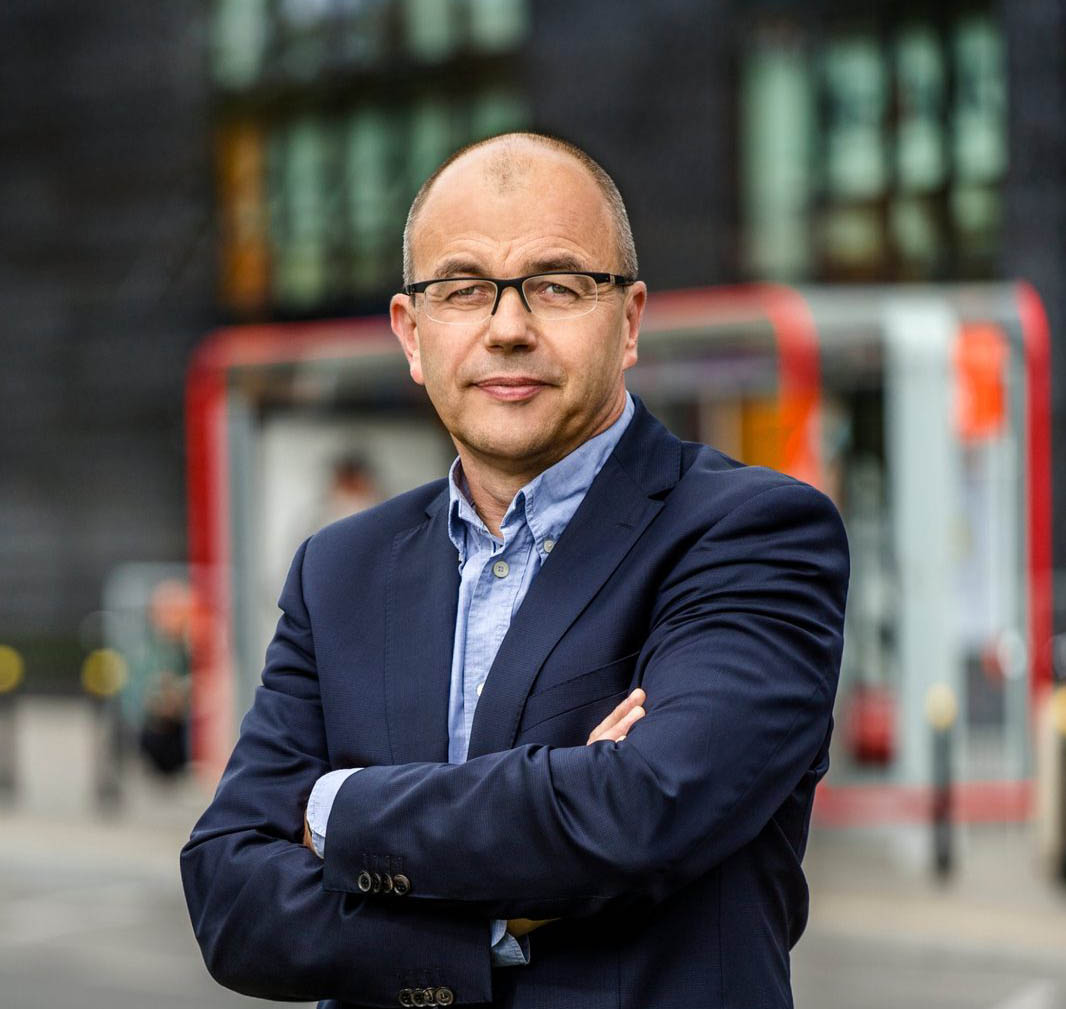 Marek Kuzaka, CEO of AMS
AMS is part of the Agora Group and the market leader in Polish Out of Home, accounting for more than a quarter of the value of the entire market. Its assets reach more than 27 million people in Poland every month across classic formats, one of the country’s largest DOOH networks, indoor commerce media in more than 50 cities, and the bus shelters and citylights it builds and maintains in partnership with local authorities.
With the Forum coming to Warsaw, WOO asked Marek Kuzaka for his view of the Polish market, the wider CEE region, and where the medium goes next.
Please tell us about AMS. Where does the company operate, what does its business look like, and what position does it hold in the Polish market?
AMS is the leader of the Out of Home market in Poland and part of the Agora Group. For more than 35 years, we have been developing communication solutions present in public spaces, reaching residents of the largest Polish metropolitan areas as well as hundreds of smaller towns and cities.
AMS is the largest Out of Home advertising company in Poland. We account for more than one quarter of the value of the entire market and remain its leader both in terms of revenue and reach. Every month, our advertising assets reach more than 27 million people in Poland. Thanks to this, AMS remains one of the largest communication platforms in the country.
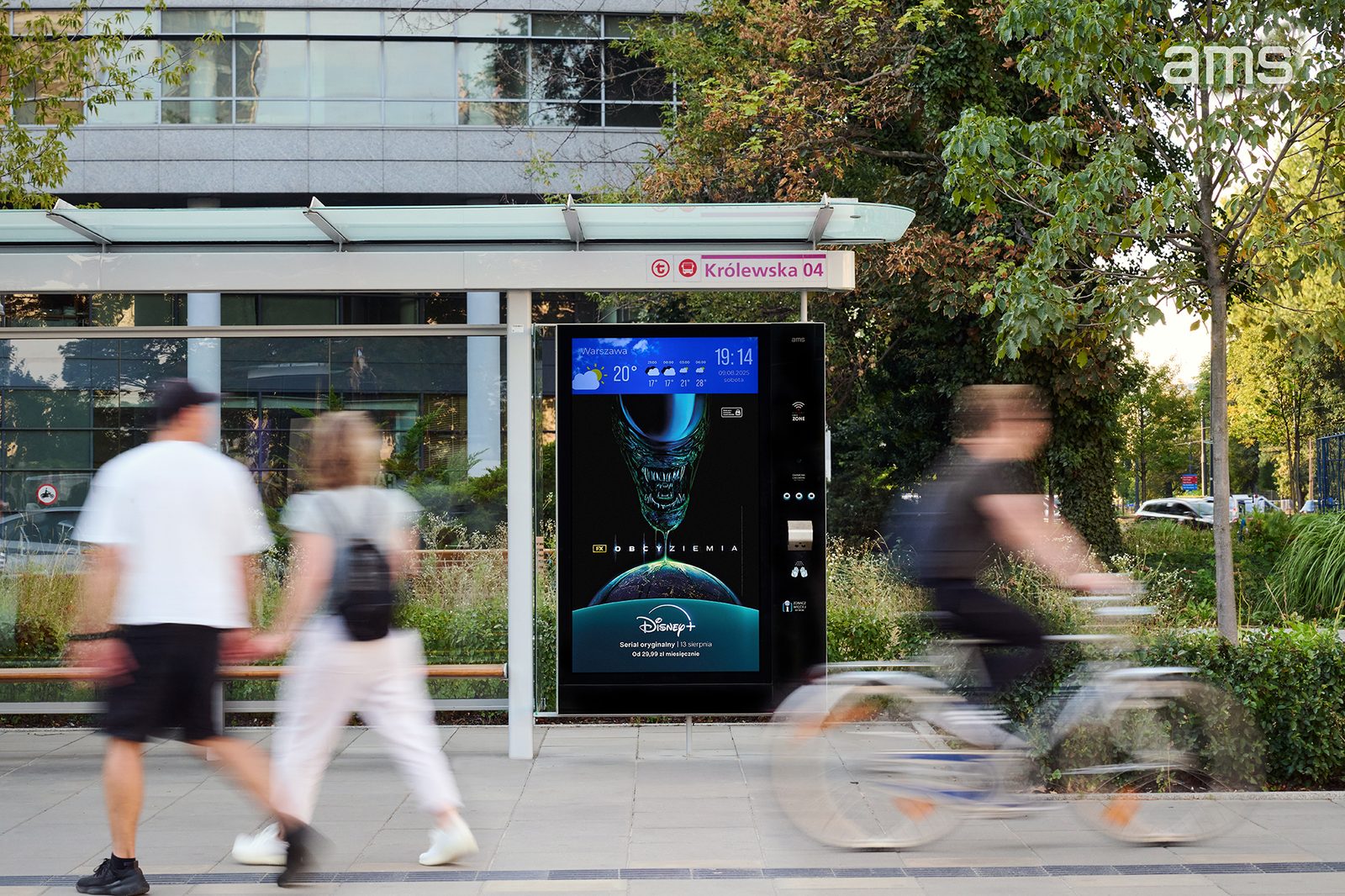
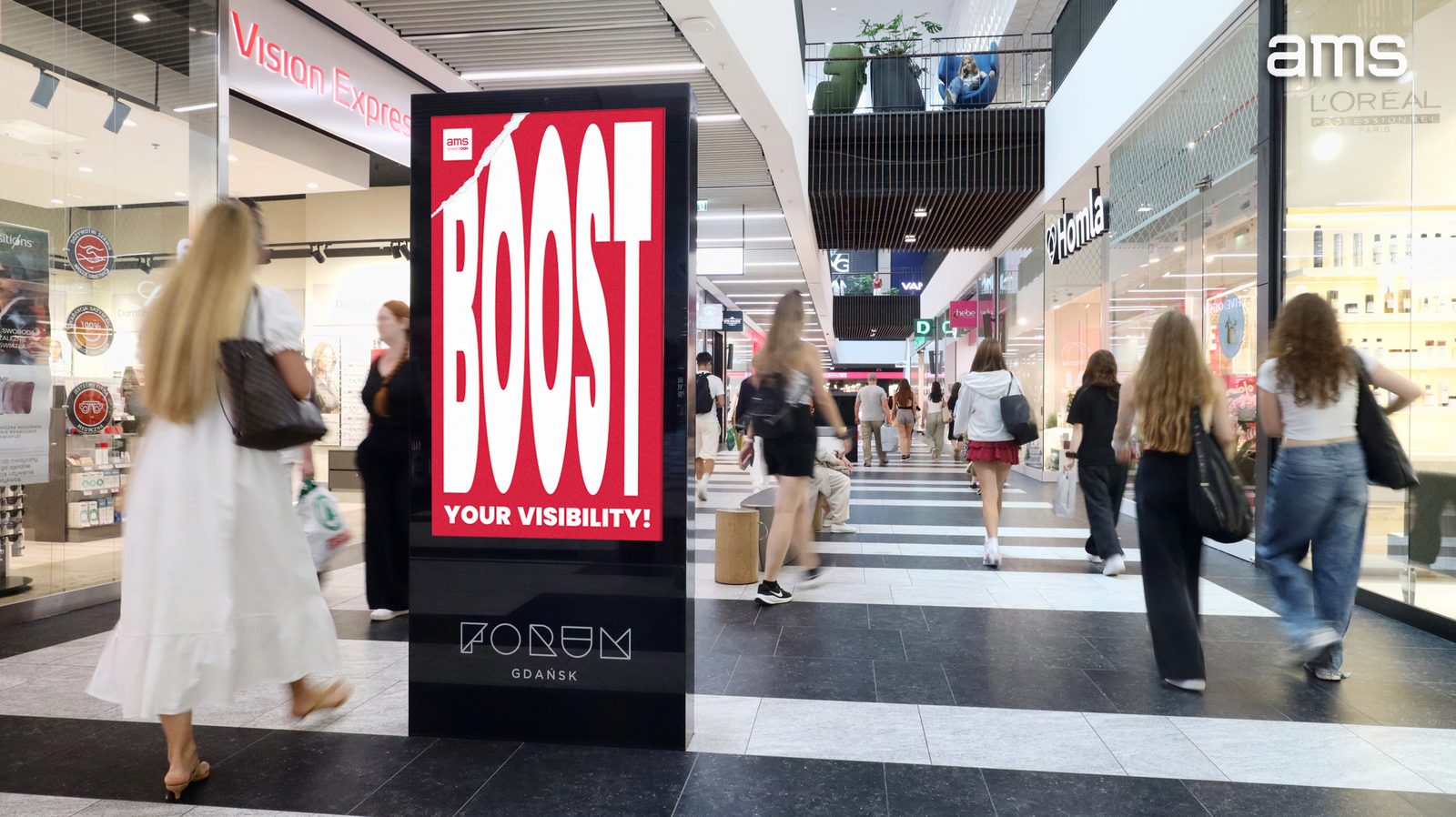
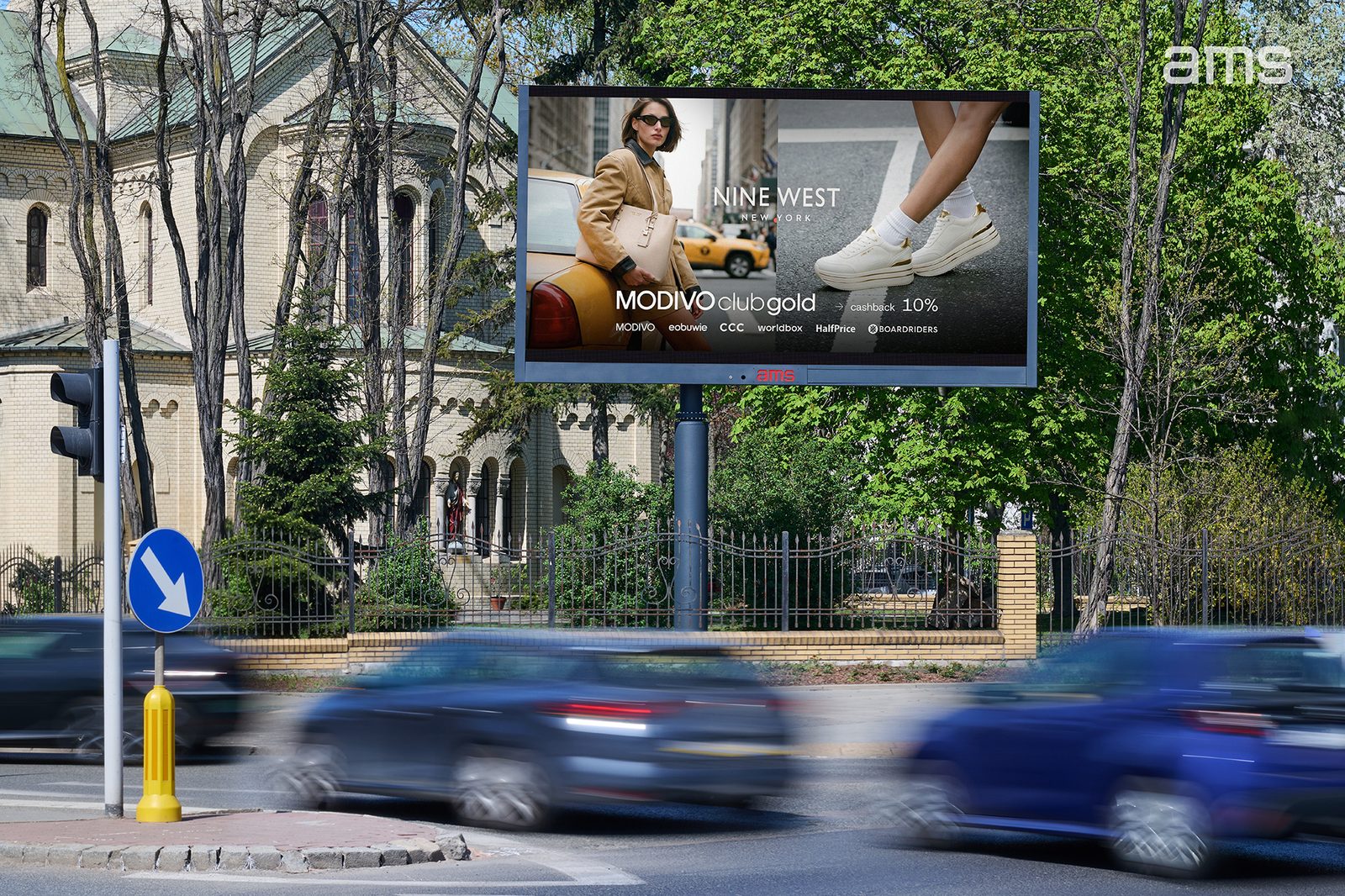
Our portfolio covers the full spectrum of Out of Home solutions, ranging from traditional outdoor advertising formats to one of the largest Digital Out of Home networks in Poland. Thanks to the presence of our digital media in shopping malls and retail centres across more than 50 cities, we operate one of the largest indoor commerce media networks in the country. At the same time, in cooperation with local authorities, we develop and maintain urban infrastructure, primarily bus shelters integrated with citylight advertising panels, while also offering advertising on public transport vehicles.
Today, AMS operates at the intersection of advertising, technology, and public space. We combine brand communication with solutions that serve city residents every day. It is precisely this combination of scale, data, technology, and presence in public space that defines our market position.
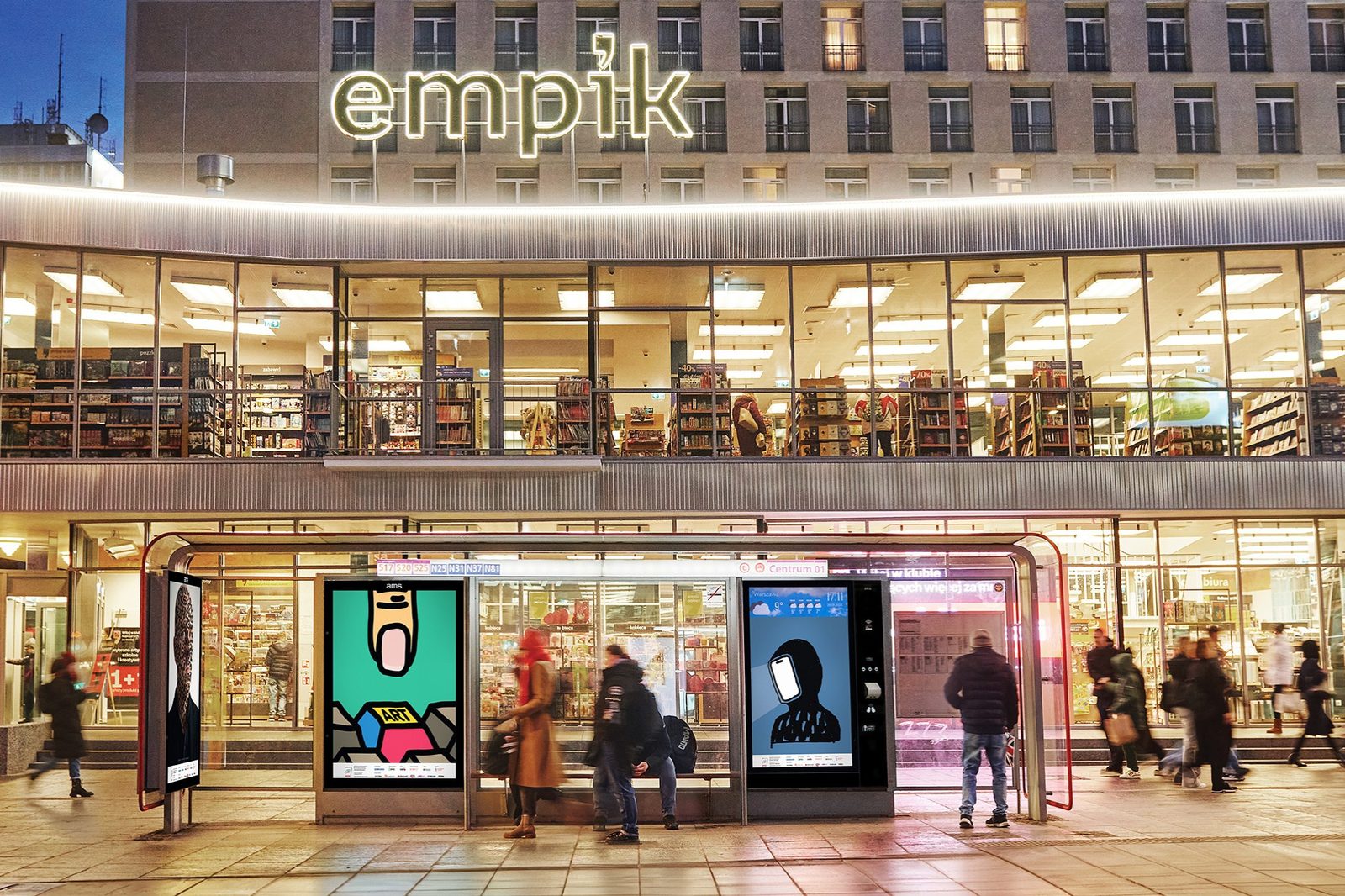 AMS bus shelter in central Warsaw combining classic citylight posters with a DOOH screen
How has the war in Ukraine affected the broader media market, and especially the Out of Home sector?
To answer this question properly, it is important to remember the broader context. Russia’s aggression against Ukraine took place at a time when the advertising market was only beginning to recover from the COVID-19 pandemic.
For the Out of Home industry, particularly in the public transport segment, where we are the market leader in Poland, the pandemic was a very difficult experience. In 2019, the value of the entire OOH market amounted to just under PLN 600 million, while in 2020 it fell to PLN 351.6 million, a decline of almost 40%. Recovery began in the following years. Although the OOH market had not yet returned to its pre-pandemic level, the outbreak of war in February 2022 brought another wave of economic uncertainty. As a result, the process of emerging from the post-pandemic downturn took longer.
However, it is worth paying attention to another aspect of this situation. The shock caused by the war quickly gave way to the need to help and support those under attack. Poland provided unprecedented support to Ukraine and Ukrainians. In 2022 alone, approximately 8 million people crossed the Polish-Ukrainian border, of whom around 2 million remained in Poland. The media sector had a special role to play here. The reception of millions of refugees fleeing the war in Ukraine was made possible in part thanks to numerous initiatives undertaken by the media, including information campaigns and public awareness campaigns. We were part of this tremendous social effort and we are proud of it. The war also demonstrated how important trustworthy communication channels present in the real world are. This experience increased the importance of quality communication and resilient information infrastructure in public spaces.
This period also forced a profound modernization of the industry. Media operators began working together on measurement standards aligned with those used in other media. One outcome was the inclusion of OOH in Mediapanel, the largest cross-media measurement project in Poland. As a result, advertisers can now analyze OOH reach within the same measurement environment used for other media channels.
Looking back, the industry emerged stronger from both crises. The market’s value rose to approximately PLN 1 billion in 2025. The main growth driver proved to be Digital Out of Home. In 2018, DOOH accounted for around 10% of market revenues, while in 2025 it represented nearly 30%.
Has the increased interest in the region also brought benefits?
Definitely.
Central and Eastern Europe has become one of the most important regions for economic growth in Europe. Poland, as the largest market in the region, is now attracting significantly more attention from investors, advertisers, and technology partners than it did just a few years ago.
For the OOH industry, this means faster technology transfer, greater interest in new media buying models, and a larger presence of global brands using advanced advertising solutions.
Another benefit is the region’s increased visibility on the international stage. We are no longer perceived as a market catching up with Western Europe, but as a place where innovative solutions are created and modern media development models are being implemented.
I hope that participants attending the WOO Forum in Warsaw will have the opportunity to experience our hospitality and see with their own eyes how modern, safe, and visitor-friendly the capital of Poland is.
What level of growth do you expect for the OOH market in 2026 and in the years ahead?
I try to be a realistic optimist. Looking at the data from recent years, we see a market that has not only recovered from the pandemic and navigated a period of geopolitical uncertainty but has entered a path of sustainable growth. The Digital Out of Home segment is growing particularly dynamically and has become the engine of growth for the entire industry.
At the same time, I believe that much more important changes lie ahead than simply the digitization of advertising assets. We are no longer talking about the digitization of OOH. We are talking about redefining the role of our medium in a world saturated with digital communication.
The more fragmented, personalized, and algorithm-driven the digital world becomes, the more valuable become those things that are real, visible, and authentic. This is exactly where the role of Out of Home grows. We are a medium present in the real world, offering brands guaranteed visibility and building trust through physical presence in public space. I often say that OOH is the last truly democratic and inclusive medium, reaching everyone regardless of social classifications.
Looking at the trends, I believe the development of OOH will be driven primarily by two factors, not only in Poland but globally as well.
The first is the growing demand for engaging real-world experiences. Increasingly, advertising will no longer be evaluated solely by the number of impressions but by its ability to evoke emotions, spark conversations, and generate organic reach. OOH should create moments that people want to photograph, record, and share on social media. This is why spectacular executions using high-quality screens, 3D effects, and interactive solutions connecting urban spaces with the digital world are becoming increasingly important.
The second trend is the movement of our medium closer to the point of purchase. Brand visibility can now directly support a consumer decision made just a few minutes later. This is why I see enormous potential in the further development of the Commerce Media ecosystem, closely connected to the Retail Media ecosystem, encompassing digital media present in shopping malls, stores, and points of sale. It is there that a brand meets the consumer at one of the most important moments in the customer journey.
What change or development could most help the OOH medium in the short and medium term?
In the short term, the most important factors will be further standardization of measurement and the integration of OOH with the tools used for campaign planning across other media channels.
Advertisers today want to compare the effectiveness of different communication channels within a single environment. The more comparable the data becomes, the easier it will be to demonstrate the true value of OOH within media plans.
In the medium term, comprehensive infrastructure digitization and the development of data-driven solutions powered by AI technologies will be crucial. This is a process that will create new value for both advertisers and audiences.
This also applies to relatively new market segments such as Retail & Commerce Media, where reliable measurement and data will be essential for further scaling advertising investments.
Is programmatic advertising developing in the region? If not, do you expect growth?
Yes. Although its scale is not yet significant, programmatic is moving beyond the experimental stage and becoming an important component of the Digital Out of Home ecosystem. For several years, AMS has been developing pDOOH sales, integrating its inventory with international technology platforms and gradually increasing the scale of such campaigns.
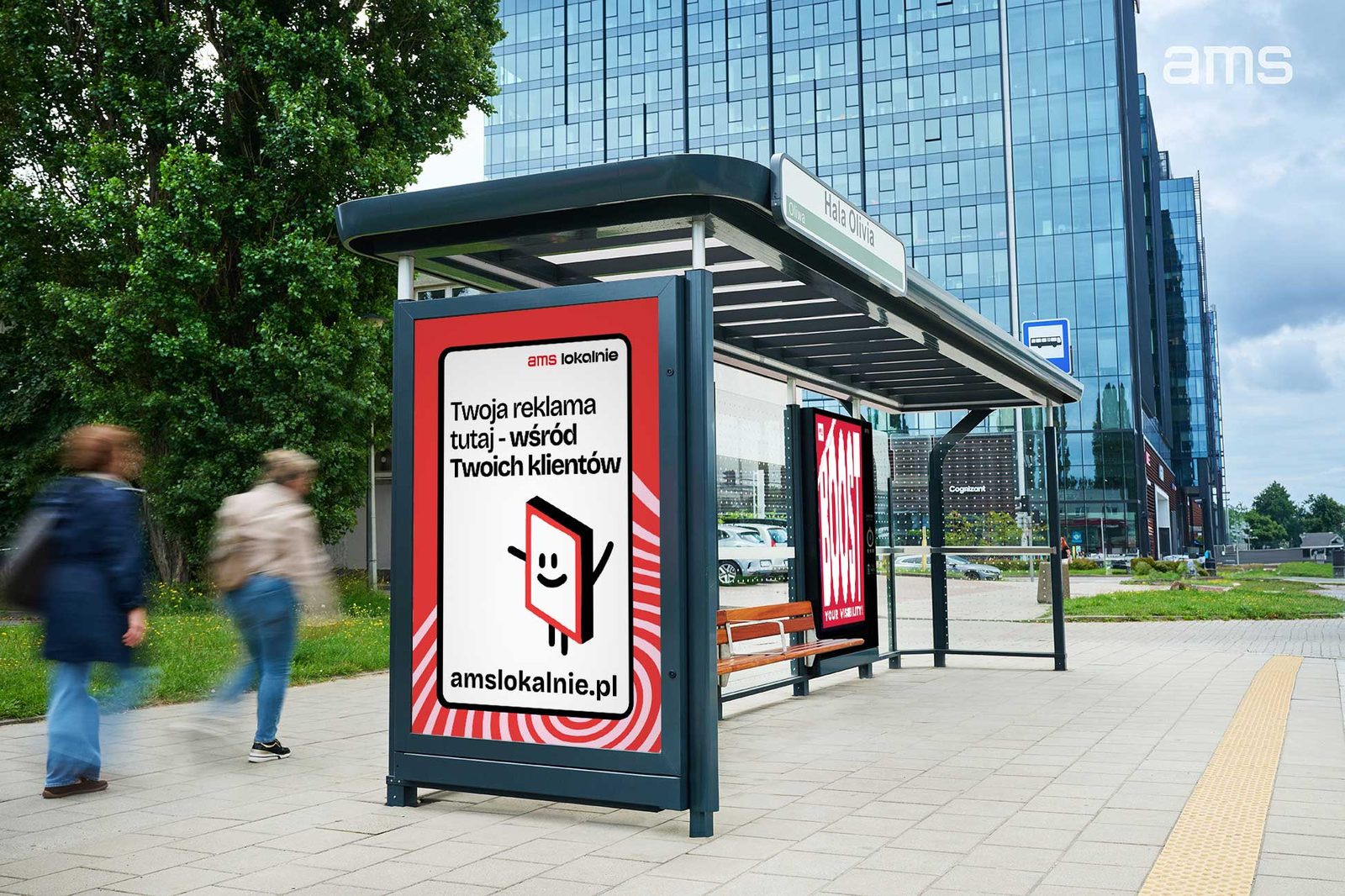
An even more important phenomenon, however, is the broader automation of advertising buying. We see enormous potential in opening the OOH market to companies that have not traditionally used this medium. This is why we are developing AMS Lokalnie, a self-service platform for purchasing advertising campaigns aimed at micro, small, and medium-sized enterprises. Our goal is to democratize access to outdoor advertising and make purchasing an outdoor campaign as simple, fast, and intuitive as purchasing online advertising.
I believe this direction will be one of the most important sources of industry growth in the years to come. Through automation, thousands of local entrepreneurs who previously had limited access to Out of Home advertising will be able to take advantage of its possibilities.
Looking ahead, are you an optimist or a pessimist? Why?
I am an optimist by nature, but in this case my optimism is supported by strong foundations.
First and foremost, because we are witnessing a fundamental shift in the way people think about media. For decades, the market operated through a division into television, radio, press, internet, or outdoor advertising. Increasingly, however, advertisers are planning communication not according to media categories but according to formats. Of the three most important formats, audio, video, and display, digitalization has made our industry particularly strong in the display and video categories. We must take advantage of this and increase our share of the media pie. This is possible and it is already happening. In recent years, this share has been growing and now exceeds 6%. Our ambition is to achieve a double-digit share, and examples from other markets show that this is entirely achievable.
From this perspective, AMS is today much more than an outdoor advertising company. We are one of the largest players in display communication outside the home, and we are continuously strengthening our capabilities in video through Digital Out of Home and Video Out of Home.
In the attention economy, contact with an audience that can truly be seen, measured, and engaged becomes increasingly valuable. OOH offers exactly that kind of contact. At the same time, the significance of the value economy continues to grow, making the positioning of our medium within local economic and social communities particularly important. In an era dominated by global technology platforms, we provide a service whose benefits largely remain within the local market.
At the same time, I believe the importance of media that reaches real people in the real world will increase even further. That is why I believe the best years for Out of Home are still ahead of us.
Marek Kuzaka
President of the Management Board at AMS S.A.
Graduate of the Faculty of Economic Sciences at the University of Warsaw. He has been involved in the Out-of-Home advertising industry for over 30 years. Since 2003, he has served as Vice President, and since 2011 as President of the Management Board of AMS SA – Poland’s OOH market leader.
He led the largest public-private partnership (PPP) project in Poland’s history involving the construction and maintenance of advertising-enabled urban furniture, implemented in Warsaw.
He is a co-author of numerous industry initiatives, including the establishment of the Polish OOH advertising audience measurement standard. A co-founder of an industry self-government organization and an expert in sector-specific legal solutions, he serves as a member of the PPP Experts Working Group at the Ministry of Funds and Regional Policy, the Board of the Public-Private Partnership Center Foundation, and the Program Council of the Polish Climate Congress.
Actively supporting third-sector initiatives, he is a member of the Pro Bono Leaders Coalition, the chapter of the Knowledge and Experience Award, and the Employers’ Council of the Faculty of Economic Sciences at the University of Warsaw. He also collaborates with the Polish Society of Urban Planners.
In recognition of his contribution to the development of civil society, he was awarded the Gold Cross of Merit.
WOO Central European Forum, Warsaw 2026
Join Marek Kuzaka and the leaders of Out of Home from across Central and Eastern Europe and beyond at the WOO Central European Forum in Warsaw.
Find out more and register